
A Note on Eating Meat in this City
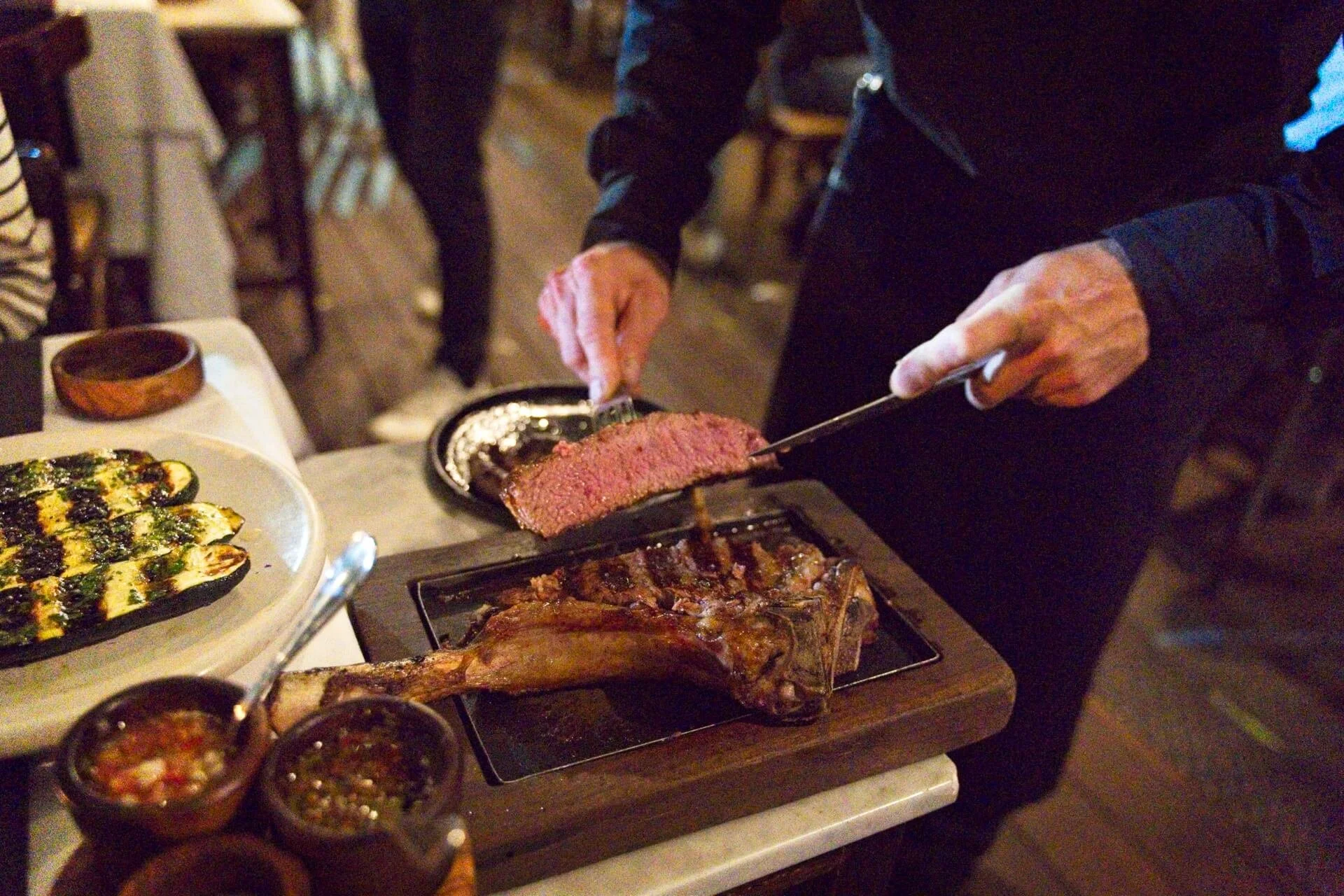
There’s a moment, somewhere between the first sip of red wine and the arrival of a plate you didn’t order, when you realize Argentina isn’t trying to impress you. It doesn’t have to.
Beef here isn’t a performance. It’s a given.
If you come looking for the “best steak,” you’ll probably find it. White tablecloths, curated wine lists, waiters who speak just enough English to guide you toward the safe choices. And you’ll eat well. But you’ll miss the point entirely.
Because the real thing—the version locals actually care about—lives somewhere else.
It’s in neighborhood parrillas where the grill has been running longer than some countries have had stable governments. Where the menu is either too long or doesn’t exist at all. Where cuts arrive in an order that makes sense only after your third glass of Malbec. No one explains it to you, and no one needs to.
You don’t start with steak.
You start with something that feels like a test. Maybe a provoleta—melted cheese blistered at the edges, oregano cutting through the fat. Or a morcilla, dark and soft, with a sweetness you weren’t expecting. If you’re paying attention, this is where you calibrate your expectations. Argentina isn’t about lean precision. It’s about depth, about letting things be what they are.
Then comes the ritual.
The asado doesn’t rush. Cuts arrive one at a time, not because the kitchen is slow, but because this is how it’s meant to unfold. You eat, you talk, you drink. The grill is doing its job in the background, quietly, without theatrics. When the meat hits the table, it doesn’t need explanation. Salt, fire, time—that’s the entire philosophy.
And here’s the part most people get wrong: don’t chase the “premium” cuts.
Yes, the bife de chorizo is excellent. The ojo de bife too. But Argentina reveals itself in the less obvious places—vacío, with its uneven texture and deep flavor; entraña, thin and intense; tira de asado, where bone and fat do most of the talking. These aren’t upgrades or alternatives. They’re the point.
You don’t ask for sauces. You don’t need them.
At most, there’s chimichurri—bright, acidic, almost sharp enough to reset your palate. Use it sparingly. This isn’t about masking anything. It’s about contrast.
And if you’re thinking about doneness, keep it simple. The sweet spot here leans closer to medium than rare. Not because they don’t know better, but because the meat—and the way it’s cooked—demands it. Trust that.
What you’re really doing, whether you realize it or not, is stepping into a system that’s been refined over generations without ever becoming self-conscious. No one here is trying to reinvent beef. They’re just very, very good at not messing it up.
By the time dessert shows up—usually something understated, like flan with dulce de leche—you’ve stopped analyzing. You’re just there, full in a way that has less to do with quantity and more to do with having understood something you couldn’t quite articulate before.
That’s how you eat meat in Argentina.
Not by finding the best place.
But by recognizing when you’ve stopped looking.
