
Why Most Food Tours Miss the Point
It’s not that they’re bad.
You’ll eat. You’ll walk. You’ll be told what something is, where it comes from, why it matters. You’ll leave full, maybe even satisfied. On paper, everything works. And yet, something doesn’t land.
Most food tours are built around coverage.
They try to show you everything—as if the goal were to collect a city in a few hours. More stops, more dishes, more information. It feels efficient. Productive, even. But food doesn’t work like that. You don’t understand a place by moving faster through it. The problem isn’t the food itself, it’s the structure around it.
You’re moved from one place to another on a fixed schedule, often with just enough time to taste, listen, and move on. The experience is segmented. Each stop stands alone. Nothing has time to connect.
By the end, you’ve seen a lot. You just haven’t experienced much. There’s also the question of selection.
Most tours optimize for accessibility:
places that are easy to explain
dishes that are easy to recognize
environments that feel immediately comfortable
Nothing challenges you. Nothing asks for your attention.
And without that, everything starts to feel the same.
Then comes the narration.
Facts, dates, ingredients, short anecdotes—delivered efficiently, often well. But information isn’t the same as understanding. Knowing what something is doesn’t tell you why it matters, or how it fits into the way people actually eat.
So you remember pieces, but not the system behind them. What’s missing is intention. Not just where you go—but why, and in what order.
A meal in Argentina isn’t a sequence of highlights, it’s a progression. There’s a rhythm to it: how you start, how things build, when you slow down, when you stop. Remove that, and you’re left with fragments.
The best food experiences don’t try to show you more.
They show you what matters, and give it enough space to unfold.
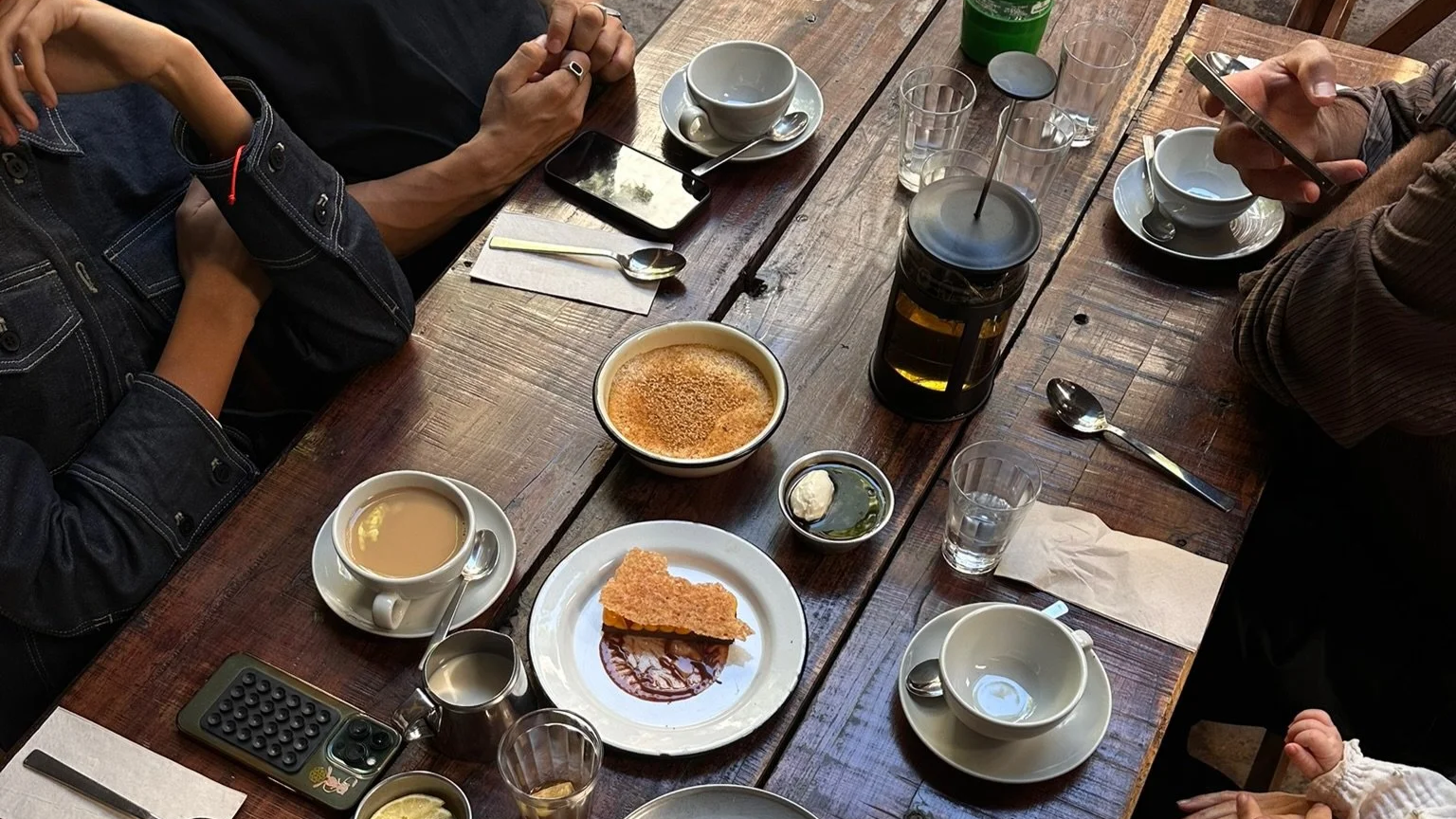
They let conversations develop. They allow for pauses. They don’t rush the table to stay on schedule. And they don’t feel the need to justify every decision with an explanation.
You’re not being led through a checklist. You’re being placed inside something that already works.
And that’s the difference most tours never quite reach.
They replicate the surface of a city—its dishes, its neighborhoods, its highlights—but not the way those things connect in real life.
So you leave with information. But not with a way of seeing.
A good food tour doesn’t try to impress you at every stop.
It builds something gradually, often without drawing attention to how it’s doing it. By the time you notice, you’re already inside it—eating, talking, understanding more than you expected.
Not because you were told more.
But because you were shown what matters.
That’s the point most tours miss.
Not the food.
Everything around it.
